






Cis2019

Side-Channel Attacks: Exploiting Implementation Flaws in Cryptographic Systems

What Are Side-Channel Attacks? (Definition and Scope)

A side-channel attack targets the physical or behavioral execution of a cryptographic system — not the underlying mathematical algorithm. The adversary observes signals emitted during computation: time elapsed, power consumed, electromagnetic radiation, or acoustic noise. These observations, rather than any flaw in the cipher itself, become the attack vector.

This distinction matters enormously. AES, RSA, and elliptic-curve cryptography are mathematically sound. Their security proofs hold in the abstract model where an algorithm is a black box. Real hardware and software, however, are not black boxes. They leak. A side-channel adversary exploits that leakage to recover secret key material without ever attacking the cipher's mathematical structure.

The scope of the problem is broad. Any system that performs cryptographic operations in a physical environment — a smartcard, a server, a mobile device — is potentially observable. The attacker's goal is to build a leakage model: a mapping between observable physical signals and the internal state of the computation.

The Attack Surface: Why Implementations Fail Where Algorithms Don't

The gap between algorithmic security and implementation security is where most real-world cryptographic failures occur. A provably secure algorithm, when executed on physical hardware, inevitably introduces observable side effects that the security proof never accounted for.

Consider a simple branching statement: if (key_bit == 1) { do_A(); } else { do_B(); }. The algorithm may be correct. But if do_A() takes measurably longer than do_B(), an attacker who can measure execution time gains information about the key bit. The algorithm is fine; the cryptographic implementation is the flaw.

This is not a theoretical edge case. Memory access patterns, branch prediction behavior, cache occupancy, and voltage fluctuations all correlate with secret-dependent data in ways that developers rarely anticipate. The attack surface is not the cryptographer's domain — it belongs to the systems programmer, the hardware designer, and the compiler writer. That cross-disciplinary gap is precisely why side-channel vulnerabilities persist even in mature, widely-audited libraries.

Major Categories of Side-Channel Attacks

Side-channel attacks divide into several well-studied categories, each exploiting a different physical or behavioral leakage channel.

Timing Attacks

A timing attack measures how long a cryptographic operation takes. When execution time depends on secret data — key bits, intermediate values — an adversary can statistically infer those secrets from repeated measurements. Paul Kocher's 1996 analysis of RSA implementations established this class as a serious practical threat, not a theoretical curiosity.

Power Analysis (SPA and DPA)

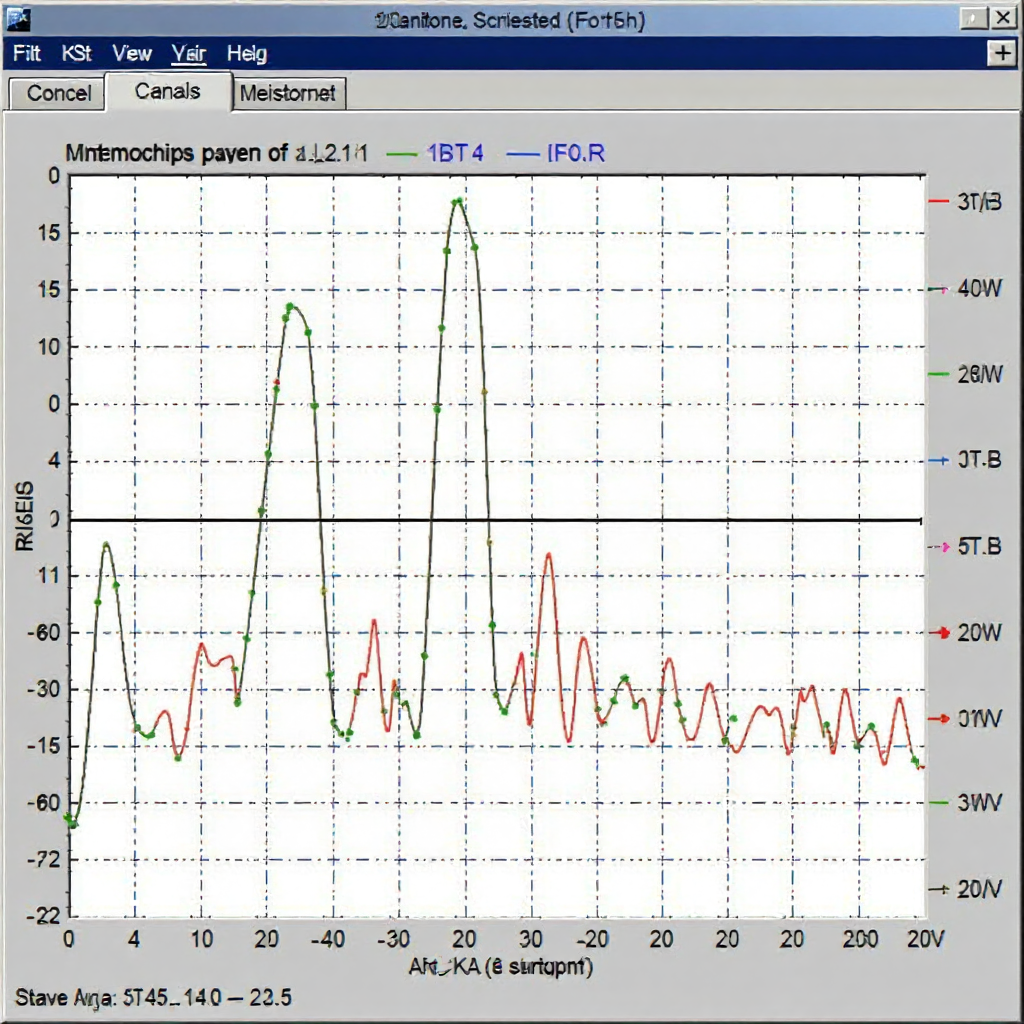
Power analysis targets embedded devices by measuring instantaneous current draw during computation. Simple Power Analysis (SPA) reads a single trace and infers key-dependent operations directly. Differential Power Analysis (DPA) applies statistical methods across many traces, correlating power consumption with hypothesized intermediate values. DPA is particularly dangerous because it can succeed even when individual traces are noisy.

Electromagnetic Emanation

Every switching transistor radiates a small electromagnetic field. Electromagnetic emanation attacks capture this radiation using a near-field probe and analyze it in ways analogous to power analysis. EM attacks can sometimes be spatially targeted to specific components on a chip, making them effective even when power line filtering is in place.

Cache-Timing Attacks

In shared computing environments — cloud virtual machines, multi-tenant servers — a cache-timing attack exploits the shared CPU cache. An attacker process infers which cache lines a victim process accessed by measuring its own access latencies. Attacks like Flush+Reload and Prime+Probe have demonstrated practical key recovery against cryptographic libraries running in co-located VMs, making this category especially relevant to modern infrastructure.

How Attackers Exploit the Leakage: From Signal to Secret

Converting raw physical observations into recovered key material follows a general methodology that researchers formalize through the leakage model framework. Understanding this pipeline clarifies why countermeasures must address each stage.

The first stage is signal acquisition. The attacker collects many measurements — power traces, timing samples, EM captures — while the target device processes known or partially known inputs. Measurement quality, probe placement, and sampling rate all affect the signal-to-noise ratio, which directly determines how many traces are needed.

The second stage is leakage modeling. The attacker hypothesizes a relationship between the physical signal and an intermediate computation value. For power analysis, the Hamming weight model — assuming power consumption correlates with the number of set bits in a value — is a standard starting point. More sophisticated models account for specific hardware architectures.

The third stage is statistical analysis. Correlation Power Analysis (CPA) computes the statistical correlation between measured traces and predicted leakage values across all key hypotheses. The hypothesis with the highest correlation identifies the correct key byte. With enough traces, this process reliably recovers full key material even in the presence of significant noise — which is what makes DPA so practically threatening.

Real-World Impact: Cryptographic Libraries and Embedded Systems

Side-channel vulnerabilities affect a wide range of deployed systems, from constrained embedded hardware to large-scale cloud infrastructure.

Smartcards and secure microcontrollers are historically the most studied targets. These devices perform cryptographic operations repeatedly, often with attacker-controlled inputs, making them ideal candidates for power and EM analysis. Payment terminals, SIM cards, and access control tokens all fall into this category.

Hardware Security Modules (HSMs) represent a hardened tier. An HSM is a tamper-resistant device designed specifically to protect cryptographic key material. Physical shielding, active tamper detection, and internal noise generation make side-channel attacks significantly harder — though not impossible. Sophisticated laboratory attacks against HSMs have been demonstrated in academic settings, underscoring that hardening is a continuum, not a binary property.

TLS libraries running on general-purpose servers face cache-timing threats. A co-located attacker process on the same physical host can observe memory access patterns during a TLS handshake. The Lucky Thirteen class of attacks demonstrated that even timing differences on the order of nanoseconds, arising from MAC verification logic, can be exploited across a network with sufficient measurement repetition.

Countermeasures and Secure Implementation Principles

Defending against side-channel attacks requires layered countermeasures applied at both the software and hardware levels. No single technique is sufficient on its own.

Constant-time programming is the foundational software defense. Code is written so that execution time is independent of secret data — no secret-dependent branches, no secret-dependent memory accesses. This is harder than it sounds: compilers can introduce data-dependent optimizations, and the processor's own microarchitecture (branch predictors, out-of-order execution) can reintroduce timing variation. Verifying constant-time behavior requires specialized tools and careful testing.

Masking is the primary hardware and algorithmic countermeasure against power and EM analysis. Each secret intermediate value is split into multiple shares using random values; operations are performed on the shares independently. A first-order masking scheme prevents single-trace SPA and raises the number of traces required for DPA significantly. Higher-order masking provides stronger guarantees at increasing computational cost — a genuine trade-off that hardware designers must budget for explicitly.

Additional techniques include noise injection (inserting random dummy operations to obscure signal patterns), physical shielding (Faraday cages, power line filtering), and randomized execution order. Each adds cost — in silicon area, power budget, or performance. Choosing the right combination depends on the threat model and the deployment environment.

Open Research Challenges and the Conference Landscape

Side-channel research remains one of the most active areas in applied cryptography and systems security, with open problems that regularly appear at venues like IEEE S&P, USENIX Security, CCS, and CHES (the Workshop on Cryptographic Hardware and Embedded Systems).

Several challenges resist clean solutions. Formal verification of constant-time properties across the full compiler and microarchitecture stack is an unsolved problem at scale. Masking schemes proven secure in idealized leakage models sometimes fail against physical devices where the model's assumptions break down — a gap between theory and practice that drives substantial research effort.

Machine learning-based side-channel attacks represent a growing frontier. Deep neural networks trained on power traces have demonstrated key recovery with fewer measurements than classical statistical methods, raising the bar for countermeasure designers. Correspondingly, the security community is investigating whether leakage certification — formally bounding how much information a device emits — can provide meaningful guarantees against learning-based adversaries.

The intersection of side-channel resistance with post-quantum cryptography introduces new complexity. Lattice-based schemes have different computational profiles than RSA or ECC; their leakage characteristics and the effectiveness of existing countermeasures are active research questions. For anyone working on cryptographic implementation security, this is a field where the problems are well-defined but the solutions remain genuinely open.

Frequently Asked Questions

What is the difference between a side-channel attack and a cryptanalytic attack?

A cryptanalytic attack targets the mathematical structure of the cipher — finding weaknesses in the algorithm itself. A side-channel attack ignores the algorithm and instead exploits physical or behavioral information leaked during execution. A perfectly secure cipher can still be broken through side-channel means if its implementation leaks secret-dependent signals.

Can software-only countermeasures fully prevent side-channel leakage?

Not entirely. Constant-time programming eliminates many software-level timing channels, but microarchitectural effects — speculative execution, cache behavior, hardware prefetchers — can reintroduce leakage below the software abstraction layer. Software countermeasures are necessary but rarely sufficient without hardware-level support.

Which cryptographic operations are most vulnerable to timing attacks?

Operations involving conditional branches or variable-time arithmetic on secret data are most at risk. RSA with naive square-and-multiply exponentiation, non-constant-time modular inversion, and padding validation routines have historically been common targets. Any operation whose runtime correlates with a secret value is a candidate.

How does Differential Power Analysis (DPA) work at a high level?

DPA collects many power traces from a device processing different inputs, then applies statistical correlation to identify which key hypothesis best predicts the observed power consumption. By targeting one small portion of the computation at a time — typically a single key byte — an attacker can recover the full key incrementally without needing to model the entire operation.

What role do hardware security modules play in mitigating side-channel risks?

An HSM provides a hardened physical environment with tamper detection, power filtering, and shielding that raises the cost and complexity of side-channel attacks significantly. However, HSMs are not immune — they shift the difficulty level rather than eliminating the threat. Their value lies in making attacks impractical for most adversaries, not in making them theoretically impossible.

{{HOMEPAGE_LINKS}}