




Security of Quantum Key Distribution (QKD) Networks: Guarantees, Threats, and Deployment Challenges

Quantum Key Distribution (QKD) networks use quantum mechanics to establish shared cryptographic keys and reveal certain forms of interception. That promise is significant, but QKD does not secure an entire network automatically. Its real-world security depends on authentication, endpoint protection, device engineering, key management, network architecture, and disciplined operations.
For information security professionals, the central question is therefore practical: which parts of the security claim belong to quantum cryptography, and which still depend on conventional controls? The answer determines whether QKD is appropriate, how it should be integrated, and what evidence a supplier or operator must provide.
What Security Does QKD Provide?
QKD provides a method for detecting disturbance during key establishment and generating shared secret keys whose security can be analyzed using quantum-mechanical principles. It does not encrypt application data by itself, authenticate identities, or protect every component connected to a quantum channel.
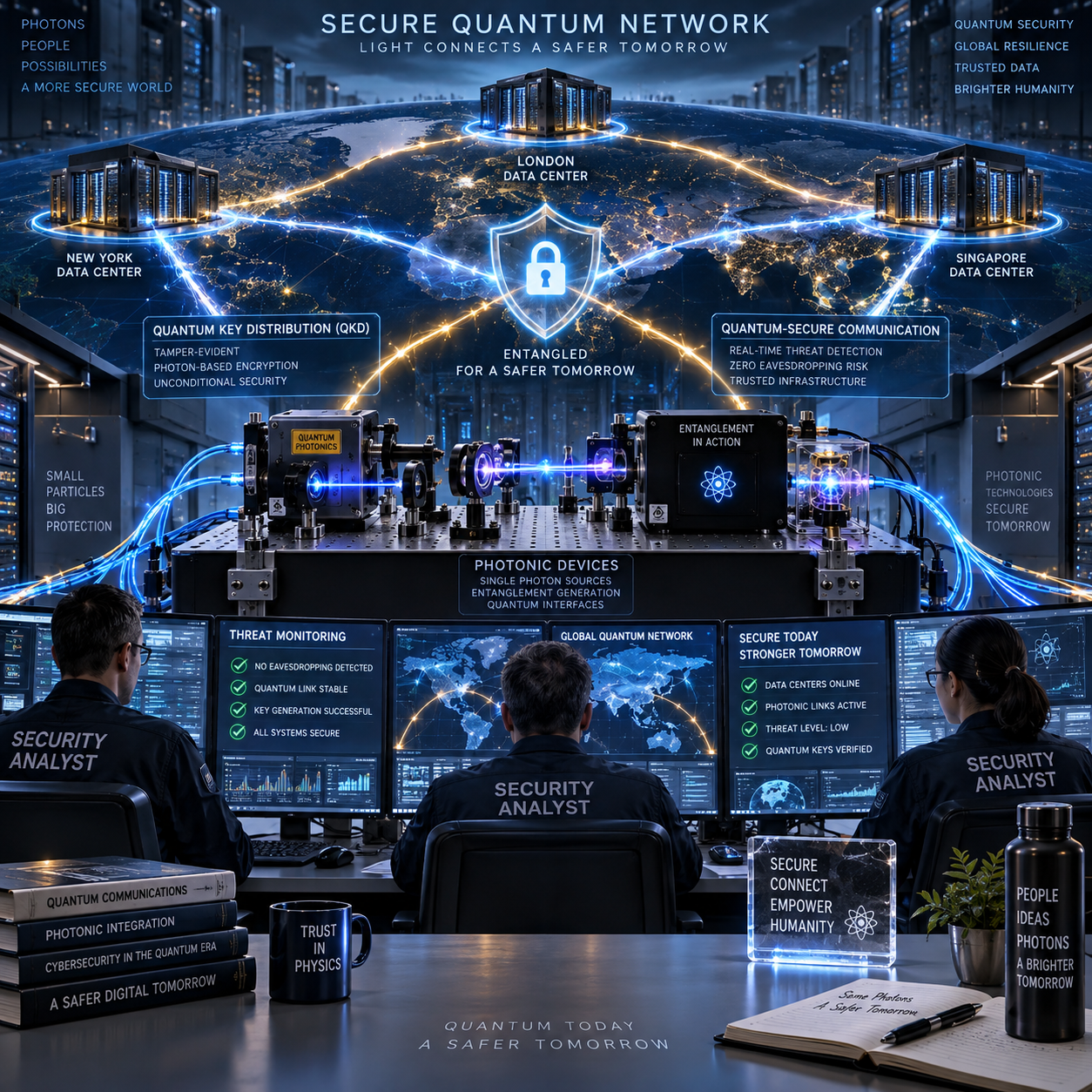
Protocols such as BB84 encode information in quantum states, often carried by individual photons. An eavesdropper attempting to measure or copy unknown quantum states can introduce detectable errors. The communicating parties compare selected measurement results, estimate the quantum bit error rate, and apply post-processing such as error correction and privacy amplification. If the observed conditions fall within an acceptable range, they derive a key suitable for a symmetric encryption system.
This security model offers a valuable property: interception can produce evidence rather than remaining entirely invisible. However, the result is conditional. Security proofs generally describe an idealized protocol under stated assumptions. They do not certify that a detector, photon source, firmware image, optical switch, or operator follows those assumptions perfectly.
QKD also needs a classical communication channel for sifting, error correction, and verification. That channel must be authenticated. Without authentication, a man-in-the-middle attacker could impersonate each endpoint and conduct separate exchanges, regardless of the quantum channel's behavior.
QKD may strengthen confidentiality against future advances in cryptanalysis, but it does not remove the need for encryption. The generated keys still require a secure cipher, protected endpoints, correct nonce handling, access control, and sound application design.
QKD Security Assumptions and Requirements
QKD security requires an authenticated classical channel, trustworthy endpoints, validated devices, and operational controls that preserve the protocol's assumptions. A failure in any of these areas can reduce or invalidate the intended security guarantee.
Authentication is foundational
Authentication binds messages on the classical channel to the correct parties. It can use pre-shared keys, digital signatures, or quantum-resistant authentication mechanisms, depending on the architecture and threat model. QKD cannot bootstrap trust from nothing; the endpoints must already possess an authenticating relationship or use a trusted public-key infrastructure.
Devices must match their security model
Real equipment includes lasers, modulators, detectors, timing circuits, processors, and software. Small deviations in intensity, timing, wavelength, detector behavior, or randomness may create exploitable information leaks. Device assurance should therefore include documented assumptions, secure configuration, patching procedures, protected random-number generation, and evidence from independent testing.
Operational controls matter just as much. Organizations need physical protection for optical equipment, restricted administrator access, accurate time and event logging, configuration baselines, backup procedures, and a process for responding when the measured error rate or device behavior changes.
A useful evaluation question is: what does the security proof assume, and where is each assumption enforced? If the answer depends on an undocumented vendor behavior or an unmonitored administrator action, the assurance case is incomplete.
Threats to QKD Networks
The main threats to QKD networks target more than the quantum channel; attackers can exploit classical communications, hardware, software, availability, supply chains, and human access. A risk assessment should treat QKD as a networked security system rather than as a single cryptographic appliance.
- Quantum-channel attacks: Eavesdropping, photon-number-splitting attacks, detector manipulation, and injected optical signals can exploit weaknesses in sources, detectors, or channel assumptions. Countermeasures may include decoy-state protocols, detector designs with reduced exposure, filtering, and continuous parameter monitoring.
- Side-channel attacks: Power consumption, electromagnetic emissions, timing, back-reflections, and unusual device responses can reveal information or provide an injection path. Security testing must examine physical behavior, not only protocol messages.
- Classical-channel attacks: An attacker may target authentication, routing, synchronization, key reconciliation, management interfaces, or software libraries. A secure quantum exchange does not compensate for compromised classical infrastructure.
- Denial of service: Jamming, fiber cuts, detector saturation, excessive error induction, and resource exhaustion can prevent key generation. QKD can detect some interference while still failing to deliver availability.
- Endpoint and key-management attacks: If an attacker compromises an endpoint, key server, application interface, or stored key, the confidentiality benefit disappears. Key access must be limited and auditable.
- Supply-chain and insider threats: Malicious firmware, altered components, weak maintenance processes, or privileged administrators may bypass protections that appear sound at the protocol level.
Security teams should correlate quantum-channel telemetry with ordinary network security signals. A rising error rate, a firmware change, and an unusual administrator login may represent one coordinated incident rather than three unrelated alerts.
Trusted Nodes, Network Architecture, and Key Management
Network architecture determines whether QKD protects an end-to-end path or only a sequence of individually trusted links. Trusted nodes can extend reach, but they also create locations where keys may be exposed, reconstructed, or misused.
In a trusted-node architecture, a key is transferred or relayed through intermediate sites. Each node must be physically and logically protected because compromise of a node may compromise the confidentiality of traffic passing through it. This creates a different risk profile from a direct point-to-point quantum link. A longer network may gain coverage while accumulating more administrative and physical trust dependencies.
Key management should define the full lifecycle:
- generation, quality checks, and attribution to approved endpoints;
- secure storage, preferably with hardware-backed protection and strict separation of duties;
- controlled distribution to encryption devices and applications;
- rotation, expiration, revocation, and destruction;
- auditable access, rate limits, inventory, and recovery procedures.
Network segmentation can reduce blast radius. For example, a QKD management plane should not share unrestricted administrative paths with general-purpose enterprise systems. Operators should also decide what happens when key generation stops: fail closed, use a reserve key pool, switch to another cryptographic path, or temporarily use a hybrid mechanism. Each choice affects confidentiality, availability, and incident response.

QKD Compared with Post-Quantum Cryptography
QKD uses specialized hardware and quantum channels, while post-quantum cryptography (PQC) uses software or firmware implementing quantum-resistant mathematical algorithms. QKD can offer a physically grounded key-distribution model, whereas PQC is easier to deploy across existing networks and devices.
| Consideration | QKD | PQC |
|---|---|---|
| Primary mechanism | Quantum states and optical systems | Quantum-resistant algorithms |
| Infrastructure | Dedicated quantum channels and devices | Updates to protocols, libraries, and hardware |
| Authentication | Still required through a classical mechanism | Provided through cryptographic protocols using PQC or other suitable methods |
| Availability concern | Channel loss, interference, and equipment dependence | Algorithm performance, implementation flaws, and migration complexity |
| Deployment scope | Best suited to selected high-value links where infrastructure is feasible | Applicable across a broad range of network and application environments |
PQC migration is typically the broader baseline for organizations preparing for quantum-enabled attacks, especially against public-key encryption and signatures. QKD may complement PQC in environments with exceptional confidentiality requirements, controllable physical routes, and the budget and expertise to operate specialized equipment.
A hybrid design can combine QKD-derived material with keys established through PQC, so that compromise of one mechanism does not automatically defeat the other. That approach increases engineering and assurance complexity. Teams must define combination rules, failure behavior, logging, and downgrade resistance rather than assuming that two mechanisms automatically provide additive security.
How to Evaluate QKD Security in Practice
Evaluate QKD security through a documented threat model, device assurance evidence, independent testing, monitoring, incident response, and lifecycle governance. A product demonstration or low error rate is not sufficient evidence of network security.
Conference attendees and security architects can use the following assessment sequence:
- Define the protected asset and adversary. Specify whether the goal is long-term confidentiality, protection from state-level interception, link security, or resilience against a particular quantum threat. Include insiders, compromised endpoints, optical access, and denial of service.
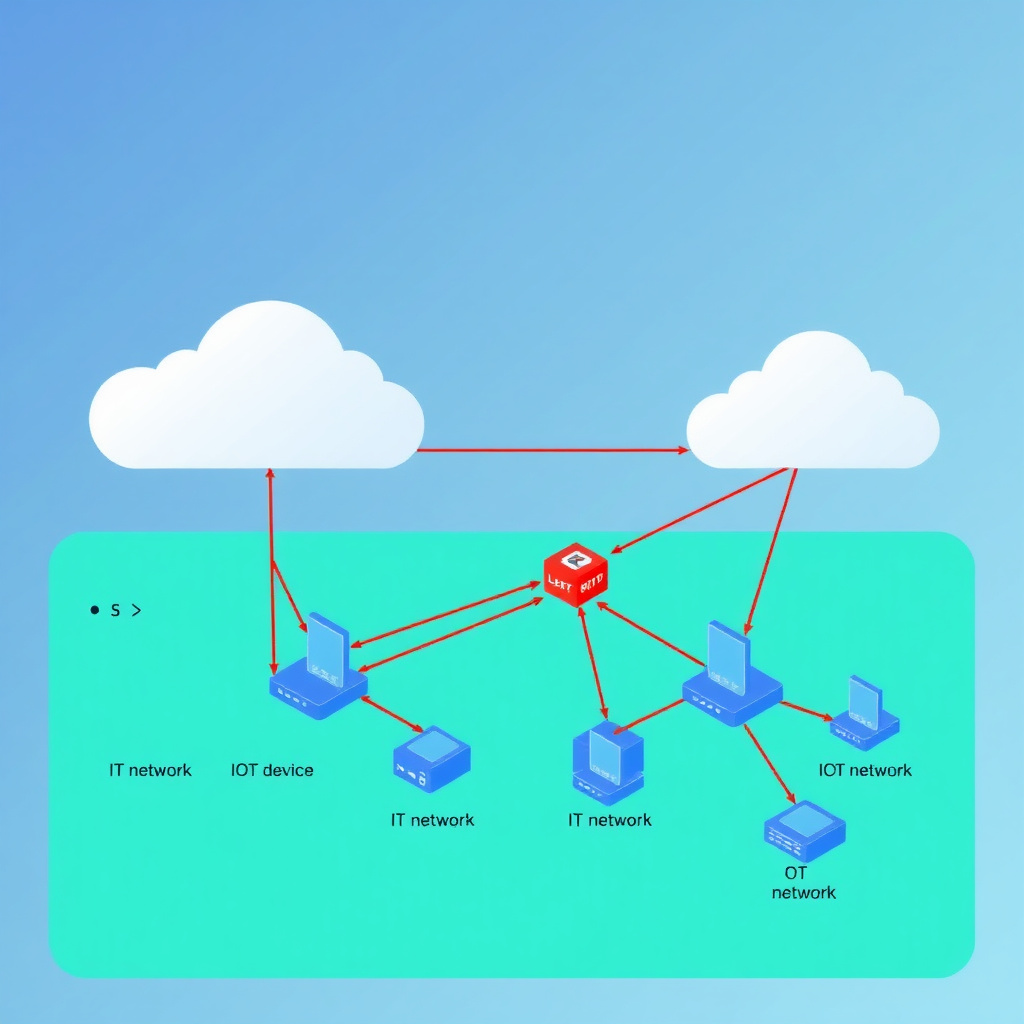
- Map trust boundaries. Identify quantum channels, classical channels, trusted nodes, key servers, encryption endpoints, management networks, suppliers, and administrators. Mark every point where plaintext or usable key material exists.
- Review assurance evidence. Ask for protocol specifications, security assumptions, randomness design, secure-development practices, vulnerability disclosure procedures, independent evaluations, penetration-test scope, and hardware or firmware provenance.
- Test realistic failure modes. Assess detector blinding, injected optical signals, authentication failure, channel interruption, stale keys, compromised management accounts, firmware rollback, and loss of a trusted node.
- Measure operational visibility. Confirm that teams can monitor error rates, key generation, authentication events, configuration changes, node health, and unusual access. Alerts need owners and response playbooks.
- Check lifecycle and compliance fit. Establish patching, replacement, cryptographic transition, procurement, records retention, audit, and secure disposal requirements. Map controls to the organization's risk framework and applicable national or sector-specific guidance.
Independent testing should include both protocol review and implementation assessment. A formally sound protocol can still be undermined by a detector interface or a privileged management service. The strongest assurance case connects technical evidence to a clear business decision: what risk is reduced, at what cost, and what residual risks remain?
Future Directions for QKD Network Security
Future QKD security depends on interoperable standards, scalable architectures, stronger implementation testing, and clearer governance for hybrid quantum-resistant networks. Increasing distance or adding nodes alone will not solve the underlying trust and operational problems.
Interoperability is a major research and deployment concern. Equipment from different suppliers must agree on key interfaces, management functions, authentication, telemetry, failover, and security policy. Standardized testing can help distinguish protocol conformance from meaningful resistance to implementation attacks.
Researchers are also examining architectures that reduce reliance on trusted nodes, including quantum repeaters and advanced network designs. Satellite and long-distance links may extend geographic reach, but they introduce additional issues involving pointing, weather, physical access, scheduling, availability, and ground-station security.
Governance questions deserve equal attention. Who certifies a QKD device? How should operators report an implementation vulnerability? What evidence should procurement teams require? How should organizations preserve confidentiality if QKD becomes unavailable? These are network security questions, not merely physics questions.
For most organizations, a sensible path is risk-based: strengthen authentication and key management now, plan migration to PQC, and assess QKD for narrowly defined use cases where its operational and physical requirements are justified.
QKD Network Security FAQ
Does QKD eliminate the need for encryption and authentication?
No. QKD generates shared key material, but encryption protects data and authentication protects the exchange from impersonation. Both remain essential.
What are the main attacks against QKD networks?
Important attacks include side-channel exploitation, detector manipulation, injected optical signals, classical-channel compromise, denial of service, endpoint compromise, malicious firmware, and trusted-node compromise.
Are trusted nodes a security weakness?
They can be. Trusted nodes extend network reach, but keys or sensitive operations may be exposed there. Physical security, access control, segmentation, monitoring, and carefully defined trust assumptions are necessary.
How does QKD differ from post-quantum cryptography?
QKD relies on specialized quantum hardware and channels. PQC relies on algorithms designed to resist quantum-enabled attacks and can usually be deployed through software, firmware, and protocol updates.
Can QKD be integrated into existing security infrastructure?
Yes, where compatible interfaces exist. Integration requires changes to key-management systems, encryption devices, authentication, monitoring, network redundancy, and incident-response procedures. A pilot should test failure and downgrade behavior before production use.